
And What a Silent Vacuum Can Teach Us About Living Well
What if the secret to everything isn’t adding more—but starting with less?
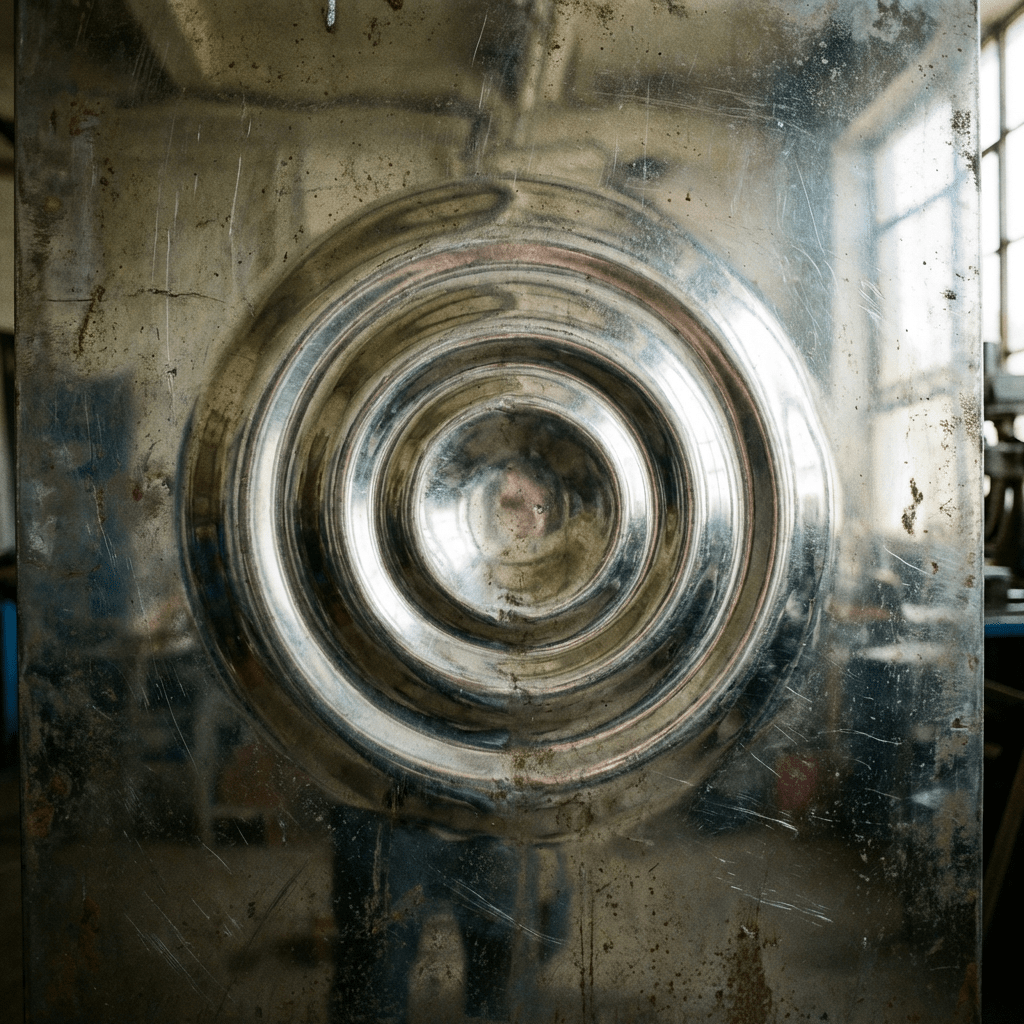
No fireworks. No grand entrance. Just a perfectly balanced vacuum… until the slightest dent appears. From that almost-invisible shift, energy emerges. From energy, structure. From structure, stars. And eventually, us—sitting here trying to understand how it all began.
Most theories pile complexity on complexity. But the boldest move in physics is this: begin with nothing. No particles. No forces. Just a field at maximum equilibrium and the smallest deviation imaginable.
Here’s the twist—this isn’t just physics. It’s a blueprint for life.
In this article, we’ll explore how a Theory of Everything that begins with nothing reframes the universe—and how its core principles can be applied to clarity, growth, resilience, and meaning in our own lives.
1. The Power of Starting From Zero
You can’t build something stable on a cluttered foundation.
In the Vacuum Tension Field perspective, the universe begins in perfect symmetry—maximum balance. No gradients. No motion. Then, a microscopic depression forms. That’s it. The whole cosmic story flows from that first imbalance.
Physics teaches us something subtle here: complexity works best when it emerges from simplicity. Even Albert Einstein built relativity from a few postulates rather than a mountain of assumptions.
In life, we rarely start from zero. We inherit beliefs, habits, narratives. But clarity often begins when we strip things down and ask: If I started from nothing, what would actually matter?
Research in cognitive psychology shows that simplifying decision environments improves clarity and reduces long-term stress.
Once a week, clear one domain of your life to “zero”—your desk, your inbox, your schedule—and rebuild intentionally.
“The definition of genius is taking the complex and making it simple.” — Albert Einstein
2. The First Dent: Why Small Shifts Change Everything
Massive change rarely starts massive.
In physics, the first dent in a perfectly balanced field creates a gradient. The moment there’s a slope, energy becomes meaningful. Motion begins. Structure forms.
Cosmic inflation theory suggests that tiny quantum fluctuations seeded the large-scale structure of the universe. NASA data estimates there are roughly two trillion galaxies in the observable universe—born from microscopic irregularities.
The same dynamic applies to habits, relationships, health, creativity. Tiny adjustments—made consistently—reshape entire systems.
Behavioral research shows that small, consistent habit changes compound dramatically over time (the principle behind marginal gains).
Don’t chase dramatic transformation. Identify one “microscopic dent” you can introduce daily—a 10-minute walk, a single honest conversation, one paragraph written.
“Great things are done by a series of small things brought together.” — Vincent van Gogh
3. Energy Is Just Unresolved Tension
That restless feeling? It might be potential.
In the VTF model, energy isn’t added to the system—it appears because the vacuum is no longer perfectly flat. Energy measures how far the system is from equilibrium.
In your own life, tension often signals misalignment—not failure. Stress can indicate growth trying to happen. Friction can indicate something outdated pressing against something emerging.
Even in physics, tension drives transformation. In general relativity, curvature—geometric tension—determines motion.
Studies in stress psychology show that reinterpreting stress as a performance enhancer improves outcomes and resilience.
When you feel tension, ask: What is trying to rebalance? Shift from avoidance to interpretation.
“In the middle of difficulty lies opportunity.” — Albert Einstein
4. The Universe Moves Toward Equilibrium—So Should We
Systems naturally seek balance. So do we.
Thermodynamics teaches us that systems evolve toward equilibrium states. The vacuum in this framework seeks to relax, to flatten, to resolve its gradient.
Human systems aren’t different. Emotional turbulence, burnout, conflict—these are gradients. Signals of imbalance.
When ignored, gradients intensify. When acknowledged, they guide correction.
Research in homeostasis shows that biological and psychological systems actively regulate toward balance when given proper feedback.
Build regular feedback loops into your life—reflection time, journaling, trusted conversations. You can’t rebalance what you don’t measure.
“The first principle is that you must not fool yourself—and you are the easiest person to fool.” — Richard Feynman
5. Nothing Is Empty—It’s Full of Potential
Silence isn’t absence. It’s readiness.
Quantum field theory reveals that even “empty” space isn’t truly empty. Vacuum fluctuations exist. The Casimir effect experimentally confirms that nothingness has measurable energy.
The implication? Emptiness is dynamic. A blank page is not void—it’s possibility.
In life, we often fear pauses. Gaps. Stillness. But creative breakthroughs, clarity, and recalibration require space.
Neuroscience shows that default mode network activity—activated during rest—plays a crucial role in insight and creativity.
Schedule unstructured time. Let your mental vacuum breathe.
“Almost everything will work again if you unplug it for a few minutes, including you.” — Anne Lamott
6. Build From First Principles, Not Noise
If the universe can run on one field, maybe you don’t need 47 priorities.
A Theory of Everything that begins with nothing is an exercise in intellectual discipline. Minimal assumptions. Maximum explanatory power.
In a world drowning in information, this matters. First-principles thinking—popularized in modern times by innovators like Elon Musk—means breaking problems down to fundamentals and rebuilding logically.
Applied personally, it means asking:
- What actually matters?
- What is noise?
- What is foundational?
Studies on decision fatigue show that reducing variables improves long-term consistency and performance.
Identify your top three non-negotiable principles. Build decisions outward from them.
“When something is important enough, you do it even if the odds are not in your favor.” — Elon Musk
Conclusion: The Quiet Blueprint of Everything
A Theory of Everything that begins with nothing isn’t about emptiness—it’s about elegance. From perfect equilibrium to the faintest dent. From slope to energy. From energy to stars.
And in that cosmic story is a personal one.
Start simple.
Respect small shifts.
Interpret tension as guidance.
Seek balance deliberately.
Honor stillness.
Build from first principles.
The universe didn’t need chaos to begin. It needed a field, a fluctuation, and somewhere to fall.
Maybe growth works the same way.
Sometimes the most powerful move you can make isn’t adding more to your life.
It’s beginning again—
from nothing.
 The Breathing Vacuum
Leave a comment